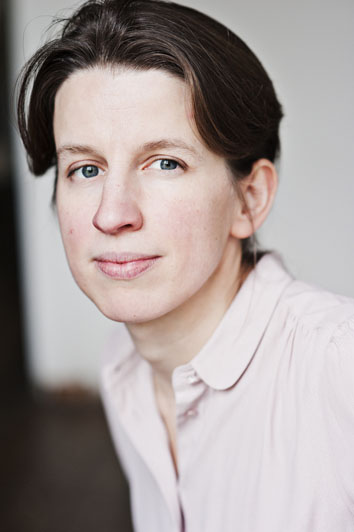
This month we bring you a guest blog by one of our authors, Suzanne Burdon. Her fictional account of Mary Shelley’s life is a fascinating read.
“Meticulously researched, Burdon’s novel follows the author of Frankenstein across England and Europe, taking in her scandalous elopement with Shelley, their turbulent relationship and their bohemian circle, which included Lord Byron. A fresh and gripping portrayal of this enigmatic literary genius.”… JC, The Lady
Don't
leave me alone with her. She's been the bane of my life since I was three years
old!'' This is what Mary Shelley, at fifty, said to her daughter-in-law, who
had kindly proposed giving Mary some time with her visiting step-sister, Claire.
I read
this some four years ago and found it so intriguing, that it led me on a
fascinating journey into the early 19th century. What could have caused such
vehemence? Why was Mary so anxious about being alone with her stepsister? I didn’t
know much about Mary Shelley. Like many people, I was vaguely aware that she
had written Frankenstein when she was quite young. I knew also that she was
married to the poet Percy Bysshe Shelley.
That
is when I discovered that I am an obsessive researcher. As a sociologist, most
of my working life has been spent conducting market and social research and
when I started reading Mary’s story there were so many aspects of it that
resonated strongly with modern life. It was operatic - even a soap opera! There
were more scandals, deaths, tortured relationships, loves and losses than in
several seasons of Desperate Housewives. Through it all there was Mary, a
strong but also vulnerable young woman in socially unsympathetic times. I
glimpsed someone who was a teenage rebel, grieving mother, determined author,
and long suffering lover of a man well ahead of his time. I wanted to get to
know her better, and especially to understand the insidious and damaging influence
of her step-sister, Claire.
There
are many biographies of Mary, but she is often crowded out by the famous people
around her and the complexities of her lifestyle. Finding the real Mary seemed
a bit like trying to find a lost child at central station in rush hour. I badly
wanted to understand her emotions and motivations more clearly.
 |
| Lock of hair |
One of
the pleasures of writing this book has been the research, not only visiting
many of the places associated with her life, but also spending hours burrowing in
libraries around the world. There are two major collections of documents
associated with Shelley. One is in the New York Public Library and the other is
in the Bodleian Library in Oxford. (Since I had daughters living in both the UK
and NYC, this was an added incentive to visit). There are many boxes and files of letters and manuscripts from the Shelley’s
and those associated with them. Even though most of it has now been digitized,
there is nothing like touching and seeing the originals. In the Bodleian boxes
there was a lovely little notebook where Mary had sketched a story, with a lock
of hair pressed between the pages.
The
first thing that struck me was how young they all were. Mary was sixteen when
she met Shelley. He was already married with a child. With the Geldof’s sadly
in the news, it struck me how like Bob Geldof Shelley must have appeared. He
was radical, wanting to save the world, wild in appearance, charismatic, and an
atheist - a rebel who had been disavowed by his baronet father. He believed in
poetry as a force for reformation and change. Poets, he asserted, 'are the unacknowledged legislators of the
world'.
 |
| The Old Pancras Churchyard |
One of
the places I visited was Pancras churchyard in London, where Mary’s mother,
Mary Wollstonecraft, is buried. (She died giving birth to Mary). Mary spent
hours there to be near to her mother, and it is where she first met Shelley. I
thought it odd that a churchyard would be a place to spend time, but it is
still pretty, with lawns and trees and a smattering of monument style graves.
Mary
was just back from a year in the hills of Scotland with some family friends.
She was strong-minded and clever, raised in a world of books and ideas. Her
mother, Mary Wollstonecraft, was author of A Vindication of the Rights of Women.
Her father was William Godwin, a philosopher and political theorist, who wrote
a groundbreaking book called Political Justice. Shelley was a disciple
of her father, and in Mary he saw a girl who had the genes to achieve great
things in literature and philosophy, as well as being attractive. His wife was
beautiful but could not match him in intellectual aspiration. In Mary he had
found his soulmate, but it was a dramatic and clandestine courtship.
When
they eventually eloped they were like kids on a gap year, recklessly setting
off to France, weeks after Napoleon was defeated, through villages still
ravaged from war. They had little money and few clothes and only the optimism
of the very young. The only shadow on their bright future was that when they
had left London in the early hours of a July morning, they had taken Mary's
step-sister, Claire, with them. There seemed to be no good reason for it,
especially as Claire and Mary were not blood relations and were not exactly
close or even compatible. It was even more incomprehensible, because Claire was
in love with Shelley and had a history of jealousy of Mary. Why did Mary let
this happen, especially as it was a decision that infected everything that
happened to her from then on and impacted on her relationship with Shelley?
Penniless,
they had to return to England cheaply and so they travelled on a boat along the
Rhine. I discovered that there is an old Frankenstein Castle, near Gernsheim in
Germany, where the alchemist Dippel lived, who was reputed to exhume bodies for
anatomical research. The seed of inspiration for the novel, Frankenstein, may
have been planted there as the travellers passed close to the ruins.
 |
| Villa Diodati |
Claire
engineered a meeting between Shelley and Byron in Geneva, because she had made
a play for Byron. Frankenstein was conceived there in Byron’s Villa Diodati on
the Lake, as a result of a challenge to write a ghost story. The Villa Diodati
is still there and overlooks the Lake as it would have in 1816. I had always
been puzzled that it was July, yet there was driving rain and thunderstorms to set
the scene. Then I discovered that 1816 was known as The Year Without A Summer.
My researches also took me to the Buckinghamshire
village of Marlow, where they lived a happy year in spite of trying to hide
Claire’s baby by Byron. I then went to many places in Italy where they
spent the last four years of their time together.
 |
| Casa Magni |
In Pisa, in particular, they
felt happy. They called it the Paradise of Exiles. When I was there I was
surprised to discover that at that time they had camels pulling boats along the
Arno, the wide river that runs through the city.
 |
| The Arno in Pisa. No camels now! |
Casa Magni, on the Gulf of Spezia is hard to
imagine as the wild and isolated place of their last days. Now it is overrun
with holiday makers, but there is still the veranda where Mary and Jane
scanned the sea in hope that their men would return alive.
Another discovery was that Frankenstein was
adapted for the stage several times in Mary’s lifetime. She seemed to feel no
concern that they added music and meddled with the script. One production was
so scary that women in the audience fainted.
I have loved every minute of the years I have
spent with Mary Shelley and I hope that readers will, like me, see her as a
complete person, flawed as well as favored, applaud her courage and sympathise
with her trials, as well as understanding something about life in the early
nineteenth century.
The title of the book Almost Invincible,
is taken from a letter that Mary's father wrote to friends whom Mary was to
visit, describing his daughter. He said: 'She is singularly bold, somewhat
imperious, and active of mind. Her desire of knowledge is great, and her
perseverance in everything she undertakes, almost invincible.' Mary certainly had to prove that prophecy in
the nine years she spent with Shelley.
The book is available to buy
from all good bookshops and online.
Almost Invincible by Suzanne
Burdon ISBN 9780992354008
You can also order directly
from Vine House Distribution.


 Ideal for those studying the Gothic (Key Stages 3, 4, or A-level) but it is also to be read for the sheer enjoyment. Enter if you dare...